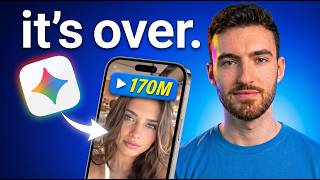
Assessment basis
We compared the supplied timestamped transcript with primary documentation checked on October 17, 2026. Claim summaries are paraphrases. Current rules and pricing can differ from those at recording.
The supplier describes the transcript source as YouTube captions with audio-dialogue synthesis. Transcript provenance, supplied video publication metadata and on-screen demonstrations were not independently authenticated. Personal earnings and third-party customer results remain unverified.
Watch the advice in context.
Quick verdict
The workflow uses real tools and openly encounters voice and lip-sync problems. The creator also recommends expertise, transparency and taking inspiration from topics rather than copying videos. The main corrections concern financial evidence and platform rules, not whether AI personas are technically possible.
What the advice gets right
- At 01:13, recommends using personal expertise.
- At 08:40, 10:24 and 12:32, acknowledges voice or lip-sync issues and revisions.
- At 13:22–14:35, advocates transparency and studying topics rather than copying entire videos.
- Near 16:19–16:35, acknowledges that paid advertising is an optional expense.
Claim findings
Labels assess the specific proposition, not the creator.
CLAIM 01
The comparison channel’s audience and income do not independently authenticate the business case.
- CLAIM IN THE SUPPLIED TRANSCRIPT
- Reports millions of views and substantial advertising and ebook earnings for an AI Amish channel.
- TIMESTAMPS
- 00:00 · 00:24 · 14:36 · 15:03 · 15:34
- RESULT
- Unverifiable
- WHY
The supplied transcript does not authenticate the channel’s private analytics, payment records, sales periods or costs.
Our analysis: The stated 3,300 sales at $47 would equal $155,100, not $138,000. Different pricing, discounts or periods might explain the gap, but none is established here. Do not invent a merchant-fee explanation or treat public audience counts as proof of private income.
CLAIM 02
The $10,000 model is conditional gross-receipt arithmetic, not a validated forecast.
- CLAIM IN THE SUPPLIED TRANSCRIPT
- Combines 300,000 views at ten dollars per thousand with 150 ebook sales at $47.
- TIMESTAMPS
- 16:39 · 16:53 · 17:05
- RESULT
- Materially Incomplete
- WHY
The assumptions give $3,000 plus $7,050, or $10,050 before expenses. Source finding: YouTube distinguishes creator RPM from advertiser CPM and explains that revenue varies.
Our analysis: The narration says dollars per thousand without explicitly naming CPM, so this report does not attribute that terminology error to it. Use an actual creator-revenue measure when estimating receipts. The assumed rate and buyer count are not authenticated benchmarks for a new persona.
CLAIM 03
Character generation and motion transfer are real; output quality still needs review.
- CLAIM IN THE SUPPLIED TRANSCRIPT
- Builds a persona and uses motion and object controls to generate short videos.
- TIMESTAMPS
- 03:00 · 07:04 · 09:10 · 10:24 · 12:32 · 13:05
- RESULT
- Mostly Supported
- WHY
Source finding: Higgsfield documents AI Influencer, motion transfer and object replacement with settings and credit costs.
Our analysis: Credit the disclosed failed outputs and corrections. A sample workflow is not a measured consistency or accuracy guarantee, and no independent inspection of the rendered output was performed. Check rights, voice authorization, continuity and the actual quote before generation.
CLAIM 04
Sensitive subject areas are not all categorically banned from monetization.
- CLAIM IN THE SUPPLIED TRANSCRIPT
- Says financial, health, legal and political topics cannot be monetized.
- TIMESTAMPS
- 01:25 · 01:41
- RESULT
- False
- WHY
Source finding: YouTube applies advertiser-friendly, content and monetization rules rather than a universal ban on all these categories; its guidelines include eligible educational medical or scientific treatments.
Our analysis: Choosing a lower-risk niche can be sensible personal advice. It is different from claiming a blanket platform prohibition. Specific misinformation, unsafe claims, treatment and originality matter. Google Search’s sensitive-topic framework is not itself a YouTube Partner Program ban.
CLAIM 05
Transparency and original expertise are useful; descriptions do not replace every required platform disclosure.
- CLAIM IN THE SUPPLIED TRANSCRIPT
- Recommends identifying AI use and creating original videos around researched topics.
- TIMESTAMPS
- 01:26 · 13:22 · 13:55 · 14:35
- RESULT
- Mostly Supported
- WHY
Source finding: YouTube requires its relevant disclosure for meaningful realistic synthetic content and separately evaluates originality and repetitive production.
Our analysis: Credit the explicit transparency advice. For a realistic synthetic persona, use the applicable upload setting rather than assuming description text alone completes disclosure. An avatar is not automatically ineligible; disclosure also does not guarantee monetization or validate the persona’s factual advice.
Viewer risk
A viewer could spend on production while treating an unauthenticated channel case or hypothetical revenue model as an expected result. Review factual advice, likeness and voice rights, disclosure and audience demand. The candid iteration and originality safeguards weigh against automatic Extra Caution on this record.
Commercial context
At 02:42–02:52 and 17:35–17:49, promotes a free community and downloadable material. The supplied dialogue does not establish a paid renewal, sponsor agreement or specific affiliate payment; linked offers were not independently examined. This report contains no affiliate links.
What should you verify before acting?
- Authenticate case-study earnings and periods.
- Separate RPM from CPM and gross receipts from profit.
- Test persona consistency and factual accuracy.
- Check likeness, voice and reference permissions.
- Use required synthetic-content disclosures.
- Apply actual topic policies instead of blanket assumptions.
Sources and research date
Primary documentation checked October 17, 2026. Sources support the stated facts, not private earnings or individual results.
- YouTube — creator RPM, advertiser CPM and revenue variation
- Higgsfield — AI Influencer workflow and controls
- Higgsfield — motion transfer and object replacement
- YouTube — advertiser-friendly topic and treatment guidelines
- YouTube — monetization, original and repetitive content requirements
- YouTube — meaningful altered or synthetic content disclosures
CHECK OUR WORK
Don’t take our word for it.
Watch the original video, inspect the cited sources and compare the findings with independent research.
Paste the prompt into your preferred AI tool. Supply the report text or transcript if it cannot open a source.
View verification prompt
Independently compare this VideoTruths report with the original video or its timestamped transcript. Do not assume the report is correct. Check the claims against current primary sources. Identify what the report gets right, any errors, missing context, or overly strong conclusions. Distinguish facts from opinion and cite your sources. Distinguish current rules and pricing from those at recording. If you cannot access the video, transcript, or report, say so clearly rather than guessing, and ask me to provide the missing material.

Report: https://videotruths.com/reports/ai-influencer-income-claims-avatar-controls-and-youtube-monetization/
Original video: https://www.youtube.com/watch?v=jUiLvgRZC5g