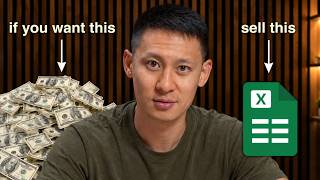
Assessment basis
We compared the supplied timestamped transcript with primary documentation checked on October 17, 2026. Claim summaries are paraphrases. Current rules and pricing can differ from those at recording.
The supplier describes the transcript source as YouTube captions with audio-dialogue synthesis. Transcript provenance, supplied video publication metadata and on-screen demonstrations were not independently authenticated. Personal earnings and third-party customer results remain unverified.
Watch the advice in context.
Quick verdict
The useful part is the progression through sourcing, listing, samples, ad spend and disappointing products. The host openly says he has a truck and storage, risks earlier proceeds on ads and finishes below the target. Those qualifications deserve credit. They do not turn an edited challenge into a reconciled financial audit or proof that anyone can repeat it.
What the advice gets right
- At 01:11–01:20, explicitly acknowledges his truck, phone and house rather than claiming to have no resources.
- At 07:08–07:22, distinguishes his existing store experience from starting a new store on a short deadline.
- At 11:33–11:38 and 13:17–13:28, acknowledges risking the proceeds and that immediate ad profitability is unusual.
- At 14:21–14:38, stops a non-selling design; at 16:40–16:56, admits missing the challenge target.
Claim findings
Labels assess the specific proposition, not the creator.
CLAIM 01
The outcome and previous store earnings remain unverified personal results.
- CLAIM IN THE SUPPLIED TRANSCRIPT
- Reports $130,000 in prior store sales, $866.38 over seven days and later $200-plus daily profit.
- TIMESTAMPS
- 07:08 · 07:16 · 16:40 · 16:48 · 16:56
- RESULT
- Unverifiable
- WHY
The supplied transcript does not independently authenticate the sales, order logs, cash exchanges, expenses or later daily results.
Our analysis: The reported total is $133.62 below $1,000, and the admission matters. Sales are not profit. Neither a narrated transaction nor a dashboard described by a supplied reviewer is an independent audit; no claim is made here that we examined the footage.
CLAIM 02
A one-dollar cash constraint is different from starting without resources or experience.
- CLAIM IN THE SUPPLIED TRANSCRIPT
- Starts with free listings, then reinvests proceeds into clothing and paid advertising.
- TIMESTAMPS
- 00:00 · 00:11 · 01:11 · 02:59 · 07:08 · 07:16
- RESULT
- Materially Incomplete
- WHY
The transcript itself identifies a truck, phone, home, earlier golf-ball resale experience and an existing print-on-demand business.
Our analysis: These are disclosed advantages, not hidden throughout. Include fuel, travel, lifting help, storage, cleaning, disposal, working time and existing setup when comparing the experiment with your own situation. The cash challenge does not measure the full economic cost of starting.
CLAIM 03
Reselling gifts is not categorically banned, but the process needs transparency.
- CLAIM IN THE SUPPLIED TRANSCRIPT
- Collects free items from marketplaces and Buy Nothing, then relists them for money.
- TIMESTAMPS
- 00:11 · 01:24 · 02:20 · 04:44 · 05:58
- RESULT
- Mostly Supported
- WHY
Source finding: Buy Nothing does not categorically prohibit resale of gifts outside the group; it emphasizes openness so givers can decide where gifts go.
Our analysis: Check the actual group’s rules and disclose resale intentions. A free item can still be damaged, difficult to transport or slow to sell. AI-generated descriptions and price suggestions do not verify condition or a completed-sale value. The record does not establish deception toward a giver.
CLAIM 04
No stocked inventory does not mean no upfront risk.
- CLAIM IN THE SUPPLIED TRANSCRIPT
- Introduces print on demand as no inventory and no upfront risk, then buys samples and pays for advertising.
- TIMESTAMPS
- 07:28 · 07:34 · 11:14 · 11:33 · 12:58 · 13:23
- RESULT
- Materially Incomplete
- WHY
Source finding: Tapstitch charges fulfillment costs for paid orders and has shipping and return conditions.
Our analysis: The later sample and advertising disclosures substantially qualify the opening. Credit them. A seller still needs cash timing, delivery and refund planning, and rights to specific designs; copying a successful shirt is not cleared merely because AI adjusts it. No particular infringement is established here.
CLAIM 05
The two stated daily subtractions work; they are not a complete net-profit ledger.
- CLAIM IN THE SUPPLIED TRANSCRIPT
- Subtracts advertising and product/shipping costs to report $6.96 on one day and $103.82 on the next.
- TIMESTAMPS
- 12:58 · 13:07 · 14:38 · 14:46
- RESULT
- Mostly Supported
- WHY
105 − 55.93 − 42.11 equals 6.96; 349.90 − 119.54 − 126.54 equals 103.82. Source finding: Depop’s regional rules separately distinguish selling, processing and optional boosting charges.
Our analysis: These calculations deserve credit within their stated scope. They do not reconcile every challenge transaction, remaining inventory, processing fee, storefront charge, refund or travel expense. Do not invent a complete ledger from ambiguous captioned amounts or assume every expense is already deducted.
CLAIM 06
One challenge and a few later days do not establish that anyone can repeat the result.
- CLAIM IN THE SUPPLIED TRANSCRIPT
- Says subsequent $200-plus profit days prove anyone can make it happen.
- TIMESTAMPS
- 16:48 · 16:56 · 17:02
- RESULT
- Unsupported
- WHY
The supplied record is one creator’s self-reported experiment and short follow-up, not a representative sample, durable earnings history or controlled test.
Our analysis: Local free inventory, buyer demand, designs, ad performance and existing skills vary. Treat the conclusion as encouragement rather than an established income forecast. For golf-ball sourcing, confirm course permission and safe access rather than assuming unused balls and surrounding land are freely available; authorization is not established in this record.
Viewer risk
Viewers could mistake a low starting cash amount for low resource requirements, overvalue unsold goods or scale ads before reliable margins emerge. Golf-course access and design permissions need checking. The explicit risk disclosures and admission of failure weigh against Extra Caution on this record.
Commercial context
At 07:34–07:47, expressly discloses Tapstitch sponsorship and describes prior use. At 10:00–10:15, offers a discount link/code and setup PDF. The supplied dialogue does not establish the exact compensation or whether the code earns a commission; no legal-compliance certification is inferred. This report contains no affiliate links.
What should you verify before acting?
- Check actual completed sales and all expenses.
- Budget transport, storage, time and safe lifting.
- Be transparent with gift donors and check group rules.
- Get course permission before collecting balls.
- Check specific design rights and fulfillment terms.
- Use actual margins and loss limits before scaling ads.
Sources and research date
Primary documentation checked October 17, 2026. Sources support the stated facts, not private earnings or individual results.
CHECK OUR WORK
Don’t take our word for it.
Watch the original video, inspect the cited sources and compare the findings with independent research.
Paste the prompt into your preferred AI tool. Supply the report text or transcript if it cannot open a source.
View verification prompt
Independently compare this VideoTruths report with the original video or its timestamped transcript. Do not assume the report is correct. Check the claims against current primary sources. Identify what the report gets right, any errors, missing context, or overly strong conclusions. Distinguish facts from opinion and cite your sources. Distinguish current rules and pricing from those at recording. If you cannot access the video, transcript, or report, say so clearly rather than guessing, and ask me to provide the missing material.

Report: https://videotruths.com/reports/one-dollar-seven-day-resale-challenge-ad-costs-and-unverified-profit/
Original video: https://www.youtube.com/watch?v=0oE5olm5hhw